

2 chapters freeNo account needed.
Opens “Of Truth” in the player · no sign-up needed
WHAT is truth? said jesting Pilate, and would not stay for an answer.
The collection presents thoughtful examinations of topics spanning both personal and public matters.
Inside the book
- Free nowno account · 2 chapters
- —Introduction1 min
- 2Of Truth4 min
- Premium57 chapters · every book, 7 days free
- 3Of Death3 min
- 4Of Unity in Religion9 min
- 5Of Revenge2 min
- 6Of Adversity2 min
- 7Of Simulation and Dissimulation6 min
- 8Of Parents and Children3 min
- 9Of Marriage and Single Life3 min
- 10Of Envy9 min
- 11Of Love3 min
- 12Of Great Place7 min
- 13Of Boldness3 min
- 14Of Goodness and Goodness Of Nature5 min
- 15Of Nobility3 min
- 16Of Seditions and Troubles13 min
- 17Of Atheism5 min
- 18Of Superstition3 min
- 19Of Travel4 min
- 20Of Empire9 min
- 21Of Counsel9 min
- 22Of Delays2 min
- 23Of Cunning6 min
- 24Of Wisdom for A Man's Self3 min
- 25Of Innovations2 min
- 26Of Dispatch3 min
- 27Of Seeming Wise2 min
- 28Of Friendship14 min
- 29Of Expense20 min
- 30Of Regiment of Health3 min
- 31Of Suspicion2 min
- 32Of Discourse4 min
- 33Of Plantations6 min
- 34Of Riches6 min
- 35Of Prophecies5 min
- 36Of Ambition4 min
- 37Of Masques and Triumphs3 min
- 38Of Nature in Men3 min
- 39Of Custom and Education3 min
- 40Of Fortune3 min
- 41Of Usury7 min
- 42Of Youth and Age4 min
- 43Of Beauty2 min
- 44Of Deformity2 min
- 45Of Building8 min
- 46Of Gardens13 min
- 47Of Negotiating3 min
- 48Of Followers and Friends3 min
- 49Of Suitors3 min
- 50Of Studies3 min
- 51Of Faction3 min
- 52Of Ceremonies, and Respects3 min
- 53Of Praise3 min
- 54Of Vain-glory3 min
- 55Of Honor and Reputation3 min
- 56Of Judicature8 min
- 57Of Anger4 min
- 58Of Vicissitude of Things10 min
- 59Of Fame6 min
The opening
Of Truth
WHAT is truth? said jesting Pilate, and would not stay for an answer. Certainly there be, that delight in giddiness, and count it a bondage to fix a belief; affecting free-will in thinking, as well as in acting. And though the sects of philosophers of that kind be gone, yet there remain certain discoursing wits, which are of the same veins, though there be not so much blood in them, as was in those of the ancients. But it is not only the difficulty and labor, which men take in finding out of truth, nor again, that when it is found, it imposeth upon men's thoughts, that doth bring lies in favor; but a natural, though corrupt love, of the lie itself. One of the later school of the Grecians, examineth the matter, and is at a stand, to think what should be in it, that men should love lies; where neither they make for pleasure, as with poets, nor for advantage, as with the merchant; but for the lie's sake. But I cannot tell; this same truth, is a naked, and open day-light, that doth not show the masks, and mummeries, and triumphs, of the world, half so stately and daintily as candle-lights. Truth may perhaps come to the price of a pearl, that showeth best by day; but it will not rise to the price of a diamond, or carbuncle, that showeth best in varied lights. A mixture of a lie doth ever add pleasure. Doth any man doubt, that if there were taken out of men's minds, vain opinions, flattering hopes, false valuations, imaginations as one would, and the like, but it would leave the minds, of a number of men, poor shrunken things, full of melancholy and indisposition, and unpleasing to themselves?
One of the fathers, in great severity, called poesy vinum daemonum, because it fireth the imagination; and yet, it is but with the shadow of a lie. But it is not the lie that passeth through the mind, but the lie that sinketh in, and settleth in it, that doth the hurt; such as we spake of before. But howsoever these things are thus in men's depraved judgments, and affections, yet truth, which only doth judge itself, teacheth that the inquiry of truth, which is the love-making, or wooing of it, the knowledge of truth, which is the presence of it, and the belief of truth, which is the enjoying of it, is the sovereign good of human nature. The first creature of God, in the works of the days, was the light of the sense; the last, was the light of reason; and his sabbath work ever since, is the illumination of his Spirit. First he breathed light, upon the face of the matter or chaos; then he breathed light, into the face of man; and still he breatheth and inspireth light, into the face of his chosen. The poet, that beautified the sect, that was otherwise inferior to the rest, saith yet excellently well: It is a pleasure, to stand upon the shore, and to see ships tossed upon the sea; a pleasure, to stand in the window of a castle, and to see a battle, and the adventures thereof below: but no pleasure is comparable to the standing upon the vantage ground of truth (a hill not to be commanded, and where the air is always clear and serene), and to see the errors, and wanderings, and mists, and tempests, in the vale below; so always that this prospect be with pity, and not with swelling, or pride. Certainly, it is heaven upon earth, to have a man's mind move in charity, rest in providence, and turn upon the poles of truth.
To pass from theological, and philosophical truth, to the truth of civil business; it will be acknowledged, even by those that practise it not, that clear, and round dealing, is the honor of man's nature; and that mixture of falsehoods, is like alloy in coin of gold and silver, which may make the metal work the better, but it embaseth it. For these winding, and crooked courses, are the goings of the serpent; which goeth basely upon the belly, and not upon the feet. There is no vice, that doth so cover a man with shame, as to be found false and perfidious. And therefore Montaigne saith prettily, when he inquired the reason, why the word of the lie should be such a disgrace, and such an odious charge? Saith he, If it be well weighed, to say that a man lieth, is as much to say, as that he is brave towards God, and a coward towards men. For a lie faces God, and shrinks from man. Surely the wickedness of falsehood, and breach of faith, cannot possibly be so highly expressed, as in that it shall be the last peal, to call the judgments of God upon the generations of men; it being foretold, that when Christ cometh, he shall not find faith upon the earth.
About the author
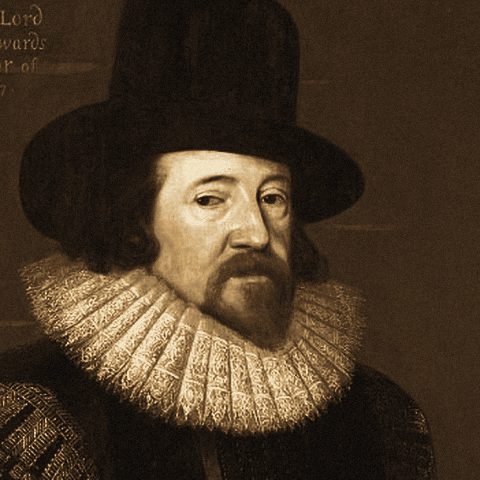
Francis Bacon
1561 – 1626 Highgate · English philosopher and statesman
Francis Bacon, 1st Viscount St Alban was an English philosopher and statesman who served as Attorney General and Lord Chancellor of England under King James I. Bacon argued for the importance of natural philosophy, guided by the scientific method, and his works remained influential throughout the Scientific Revolution.
- 1597The Essays or Counsels, Civil and Moral
- 1605The Advancement of Learning
- 1626Died, Highgate
- 1627New Atlantis
If you like The Essays or Counsels, Civil and Moral
More like this


Start with “Of Truth”
2 chapters free right now — no account. Your place follows you to iPhone and Android.