

2 chapters freeNo account needed.
Opens “The Ideal of the Classical Type of Art” in the player · no sign-up needed
Lectures on Aesthetics or Lectures on Fine Art is a compilation of notes from university lectures on aesthetics given by Georg Wilhelm Friedrich Hegel in Heidelberg in 1818 and in Berlin in 1820/21, 1823, 1826 and 1828/29.
Inside the book
- Free nowno account · 2 chapters
- —Introduction8 min
- 1The Ideal of the Classical Type of Art8 min
- Premium28 chapters · every book, 7 days free
- 2The Formal Self-Stability of Particular Individualities2 min
- 3The Philosophy of Fine Art9 min
- 4Of the Symbol Generally31 min
- 5Division of the Subject13 min
- 6First Chapter3 min
- 7Second Chapter3 min
- 8Third Chapter3 min
- 9Unconscious Symbolism2 min
- 10A. Immediate Unity of Significance and Form23 min
- 11B. Fantastic Symbolism38 min
- 12C. Real Symbolism39 min
- 13The Symbolism of the Sublime7 min
- 14A. The Pantheism of Art17 min
- 15B. The Art of Sublimity16 min
- 16The Conscious Symbolism of the Comparative Type of Art11 min
- 18Chapter 1733 min
- 19Chapter 18, part 133 min
- 20Chapter 18, part 234 min
- 19C. The Disappearance of the Symbolic Type of Art15 min
- 20The Classic Type in General40 min
- 23The Dissolution of the Classical Type of Art39 min
- 24Of the Romantic Generally32 min
- 26Chivalry51 min
- 32Chapter 27, part 151 min
- 33Chapter 27, part 253 min
The opening
The Ideal of the Classical Type of Art
Introduction and Division of subject-matter 229
1. The Ideal of Classical Art generally 230
(a) The Classical Ideal is a creation of free artistic activity, though it reposes on earlier historical elements 230
[(α) The Greek gods are neither the appearance of mere external Nature, nor the abstraction from one Godhead 232
(β) The Greek artist is a poet. But his productive power is concretely spiritual, not merely capricious 233
(γ) The relation of the Greek gods to human life. Illustrations from Homer, etc.] 233
(b) What is the type of the new gods of Greek art? 235
[(α) Their concentrated individuality, or substantive characterization 236
(β) Their beauty not merely spiritual, but also plastic 237
(γ) Removal of them from all that is purely finite into a sphere of lofty blessedness exalted above mere sensuous shape] 238
(c) The nature of the external representation. Sculpture, in its secure self-possession, most suited as the medium 241
2. The Sphere or Cycle of the Individual Gods 242
(a) What is called the "divine Universum" is here broken up into particular deities 242
(b) Absence of an articulate system 243
(c) The general character of their distinguishing attributes 244
3. The particular Individuality of the Gods 246
(a) The appropriate material for such individualization
[(α) The natural religions of symbolism a primary source. Illustrations 247
(β) That of local conditions 250
(γ) That of the world of concrete fact. Illustrations from Homer, etc.] 254
(b) Retention of a fundamental ethical basis 258
(c) Advance in the direction of grace and charm 259
CHAPTER III
THE DISSOLUTION OF THE CLASSICAL TYPE
1. Fate or Destiny 261
2. Dissolution through the nature of the anthropomorphism of the gods 263
[(a) Absence or defect of the principle of subjectivity as here asserted 263
(b) The transition to Christian conceptions only found in more modern art. The prosaic art of the Aufklärung. Illustrations 266
(c) The dissolution of classical art in its own province] 270
3. Satire 273
(a) Distinction between the dissolution of classical and symbolic art 274
(b) The Satire 276
(c) The Roman world as the basis of the satire with illustrations ancient and modern 277
SUBSECTION III
THE ROMANTIC TYPE OF ART
INTRODUCTION OF THE ROMANTIC IN GENERAL
1. The Principle of inward Subjectivity 282
2. The steps in the Evolution of the content and form of the Romantic Principle 283
[(a) Point of departure deduced from the Absolute viewed as the determinate existence of a self-knowing subject of thought and volition. Man viewed as self-possessed Divine. History of Christ 286
(b) This process of self-recognition and reconcilement viewed as a process in which strain and conflict arise. Death as viewed by Christian and Greek art contrasted 287
(c) The finite aspect of subjective life in the secular interests, the passions, collisions, and suffering, or enjoyment of the earthly life] 290
3. The romantic mode of exposition in relation to its content 291
(a) The content of romantic viewed relatively to the Divine extremely restricted. Nature divested of its association, symbolic or otherwise, with Divinity 291
(b) Religion the premiss of romantic art in a far more enhanced degree than in symbolic art. Influence of the romantic principle on the medium adopted 293
(c) Two worlds covered by the romantic principle, viz., the soul-kingdom of Spirit reconciled therein, and the realm of external Nature from which even the aspect of ugliness is not excluded. Latter world only portrayed in so far as soul finds a home therein] 293
Division of subject-matter 295
CHAPTER I
THE RELIGIOUS DOMAIN OF ROMANTIC ART
1. The Redemption history of Christ 302
(a) The principle of Love as paramount in this religious sphere. How far Art in such a sphere is a superfluity 303
(b) From a certain aspect the appearance of Art is necessary 303
(c) The aspect of contingency in the particularity of an individual Person as such Divine 304
[(α) The presentment by artists of the exterior personality of Christ 304
(β) The conflict inherent in the religious growth, viewed as a process, though determining that process universally, is concentrated in the history of one person in the first instance 306
(γ) The feature of death only regarded here as a point of transition to self-reconcilement] 308
2. Religious Love 309
(a) Conception of the Absolute as Love 309
(b) Form of Love as self-concentrated emotion. Affiliation of such with sensuous presentment 310
(c) Love as the Ideal of romantic art 310
[(α) Christ as Divine Love 311
(β) Form most compatible with Art the love of mother. Mary, mother of Jesus 311
(γ) Love of Christ's disciples and the Christian community] 313
3. The Spirit of the Community 313
(a) The Martyrs 315
(b) Penance and conversion within the soul 320
(c) Miracles and Legends 323
CHAPTER II
CHIVALRY
Introduction 325
1. Honour 332
(a) Notion of same. Contrast between Greek and modern art in this respect 332
(b) Vulnerability of same 335
(c) Reparation demanded. Honour a mode of self-subsistency which is self-reflective 336
2. Love 337
(a) Fundamental conception of. Illustrations from poetry 337
(b) Collisions of the same 341
[(α) That between honour and love 341
(β) That between the supreme spiritual forces of state, family, etc., and love 342
(γ) Opposition between love and external conditions in the prose of life and the prejudice of others] 342
(c) Limitation of contingency inherent in the conception itself 343
3. Fidelity 345
(a) Loyalty of service 346
(b) The nature of its co-ordination with a social order either in the world of Chivalry or the modern 347
(c) Nature of its collisions. Illustrations. The "Cid," etc. 348
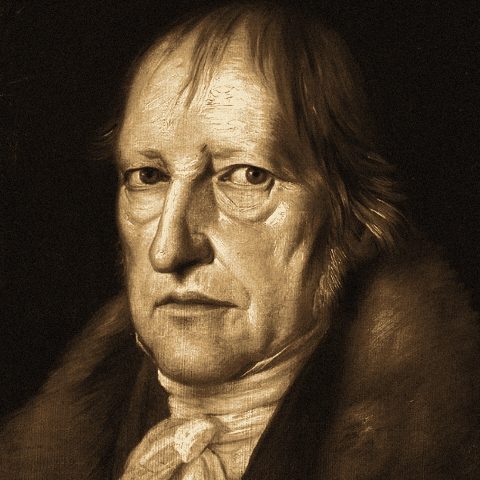
About the author
Georg Wilhelm Friedrich Hegel
1770 Stuttgart – 1831 Berlin · German philosopher and theologian
Georg Wilhelm Friedrich Hegel was a German philosopher and a major figure in the tradition of German idealism. His influence on Western philosophy extends across a wide range of topics—from metaphysical issues in epistemology and ontology, to political philosophy, to philosophy of art and philosophy of religion.
- 1770Born, Stuttgart
- 1812The Logic of Hegel
- 1831Died, Berlin
- 1835The Philosophy of Fine Art, Volume 1
- 1835The Philosophy of Fine Art, Volume 2
- 1835The Philosophy of Fine Art, Volume 3
- 1835The Philosophy of Fine Art, Volume 4
More by Georg Wilhelm Friedrich Hegel
Keep going with Hegel


If you like The Philosophy of Fine Art, Volume 2
More like this
 The Critique of Pure ReasonKant19 h 44 m
 Fundamental Principles of the Metaphysic of MoralsKant2 h 41 m
 Kant's Critique of JudgementKant11 h 13 m
 Prolegomena to Any Future MetaphysicsKant3 h 59 m
 Life's Basis and Life's IdealEucken12 h 5 m
 Prolegomena to the Study of Hegel's PhilosophyWallace13 h 4 m

Start with “The Ideal of the Classical Type of Art”
2 chapters free right now — no account. Your place follows you to iPhone and Android.