

Chapter 1 freeNo account needed.
Opens “The Dawn” in the player · no sign-up needed
An ancient English Cathedral Tower?
The Mystery of Edwin Drood is a novel by English author Charles Dickens, originally published in 1870. It was his final novel and was left unfinished when he died.
Inside the book
- Free nowno account · 1 chapter
- 1The Dawn7 min
- Premium22 chapters · every book, 7 days free
- 2A Dean, and A Chapter Also25 min
- 3The Nuns’ House25 min
- 4Mr. Sapsea20 min
- 5Mr. Durdles and Friend14 min
- 6Philanthropy in Minor Canon Corner21 min
- 7More Confidences Than One19 min
- 8Daggers Drawn20 min
- 9Birds in the Bush32 min
- 10Smoothing the Way30 min
- 11A Picture and A Ring30 min
- 12A Night with Durdles31 min
- 13Both at Their Best23 min
- 14When Shall These Three Meet Again?29 min
- 15Impeached18 min
- 16Devoted22 min
- 17Philanthropy, Professional and Unprofessional31 min
- 18A Settler in Cloisterham18 min
- 19Shadow on the Sun-Dial15 min
- 20A Flight22 min
- 21A Recognition11 min
- 22A Gritty State of Things Comes on37 min
- 23The Dawn Again46 min
The opening
The Dawn
An ancient English Cathedral Tower? How can the ancient English Cathedral tower be here! The well-known massive gray square tower of its old Cathedral? How can that be here! There is no spike of rusty iron in the air, between the eye and it, from any point of the real prospect. What is the spike that intervenes, and who has set it up? Maybe it is set up by the Sultan's orders for the impaling of a horde of Turkish robbers, one by one. It is so, for cymbals clash, and the Sultan goes by to his palace in long procession. Ten thousand scimitars flash in the sunlight, and thrice ten thousand dancing-girls strew flowers. Then, follow white elephants caparisoned in countless gorgeous colours, and infinite in number and attendants. Still the Cathedral Tower rises in the background, where it cannot be, and still no writhing figure is on the grim spike. Stay! Is the spike so low a thing as the rusty spike on the top of a post of an old bedstead that has tumbled all awry? Some vague period of drowsy laughter must be devoted to the consideration of this possibility.
Shaking from head to foot, the man whose scattered consciousness has thus fantastically pieced itself together, at length rises, supports his trembling frame upon his arms, and looks around. He is in the meanest and closest of small rooms. Through the ragged window-curtain, the light of early day steals in from a miserable court. He lies, dressed, across a large unseemly bed, upon a bedstead that has indeed given way under the weight upon it. Lying, also dressed and also across the bed, not longwise, are a Chinaman, a Lascar, and a haggard woman. The two first are in a sleep or stupor; the last is blowing at a kind of pipe, to kindle it. And as she blows, and shading it with her lean hand, concentrates its red spark of light, it serves in the dim morning as a lamp to show him what he sees of her.
"Another?" says this woman, in a querulous, rattling whisper. "Have another?"
He looks about him, with his hand to his forehead.
"Ye've smoked as many as five since ye come in at midnight," the woman goes on, as she chronically complains. "Poor me, poor me, my head is so bad. Them two come in after ye. Ah, poor me, the business is slack, is slack! Few Chinamen about the Docks, and fewer Lascars, and no ships coming in, these say! Here's another ready for ye, deary. Ye'll remember like a good soul, won't ye, that the market price is dreffle high just now? More nor three shillings and sixpence for a thimbleful! And ye'll remember that nobody but me (and Jack Chinaman t'other side the court; but he can't do it as well as me) has the true secret of mixing it? Ye'll pay up accordingly, deary, won't ye?"
She blows at the pipe as she speaks, and, occasionally bubbling at it, inhales much of its contents.
"O me, O me, my lungs is weak, my lungs is bad! It's nearly ready for ye, deary. Ah, poor me, poor me, my poor hand shakes like to drop off! I see ye coming-to, and I ses to my poor self, 'I'll have another ready for him, and he'll bear in mind the market price of opium, and pay according.' O my poor head! I makes my pipes of old penny ink-bottles, ye see, deary—this is one—and I fits-in a mouthpiece, this way, and I takes my mixter out of this thimble with this little horn spoon; and so I fills, deary. Ah, my poor nerves! I got Heavens-hard drunk for sixteen year afore I took to this; but this don't hurt me, not to speak of. And it takes away the hunger as well as wittles, deary."
She hands him the nearly-emptied pipe, and sinks back, turning over on her face.
He rises unsteadily from the bed, lays the pipe upon the hearth-stone, draws back the ragged curtain, and looks with repugnance at his three companions. He notices that the woman has opium-smoked herself into a strange likeness of the Chinaman. His form of cheek, eye, and temple, and his colour, are repeated in her. Said Chinaman convulsively wrestles with one of his many Gods or Devils, perhaps, and snarls horribly. The Lascar laughs and dribbles at the mouth. The hostess is still.
"What visions can she have?" the waking man muses, as he turns her face towards him, and stands looking down at it. "Visions of many butchers' shops, and public-houses, and much credit? Of an increase of hideous customers, and this horrible bedstead set upright again, and this horrible court swept clean? What can she rise to, under any quantity of opium, higher than that!—Eh?"
He bends down his ear, to listen to her mutterings.
"Unintelligible!"
As he watches the spasmodic shoots and darts that break out of her face and limbs, like fitful lightning out of a dark sky, some contagion in them seizes upon him: insomuch that he has to withdraw himself to a lean arm-chair by the hearth—placed there, perhaps, for such emergencies—and to sit in it, holding tight, until he has got the better of this unclean spirit of imitation.
Then he comes back, pounces on the Chinaman, and seizing him with both hands by the throat, turns him violently on the bed. The Chinaman clutches the aggressive hands, resists, gasps, and protests.
"What do you say?"
A watchful pause.
"Unintelligible!"
Slowly loosening his grasp as he listens to the incoherent jargon with an attentive frown, he turns to the Lascar and fairly drags him forth upon the floor. As he falls, the Lascar starts into a half-risen attitude, glares with his eyes, lashes about him fiercely with his arms, and draws a phantom knife. It then becomes apparent that the woman has taken possession of this knife, for safety's sake; for, she too starting up, and restraining and expostulating with him, the knife is visible in her dress, not in his, when they drowsily drop back, side by side.
There has been chattering and clattering enough between them, but to no purpose. When any distinct word has been flung into the air, it has had no sense or sequence. Wherefore "unintelligible!" is again the comment of the watcher, made with some reassured nodding of his head, and a gloomy smile. He then lays certain silver money on the table, finds his hat, gropes his way down the broken stairs, gives a good morning to some rat-ridden doorkeeper, in bed in a black hutch beneath the stairs, and passes out.
That same afternoon, the massive gray square tower of an old Cathedral rises before the sight of a jaded traveller. The bells are going for daily vesper service, and he must needs attend it, one would say, from his haste to reach the open Cathedral door. The choir are getting on their sullied white robes, in a hurry, when he arrives among them, gets on his own robe, and falls into the procession filing in to service. Then, the Sacristan locks the iron-barred gates that divide the sanctuary from the chancel, and all of the procession having scuttled into their places, hide their faces; and then the intoned words, "WHEN THE WICKED MAN—" rise among groins of arches and beams of roof, awakening muttered thunder.
About the author
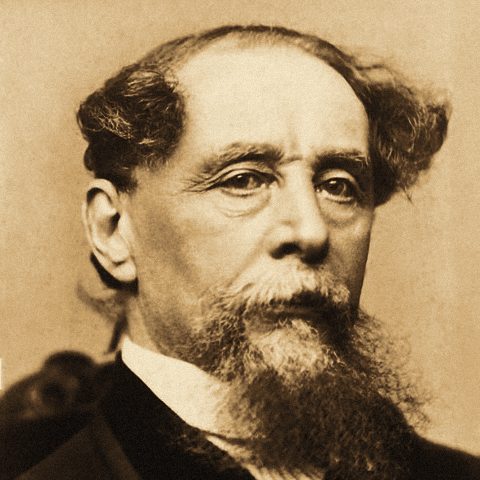
Charles Dickens
1812 Landport – 1870 · English novelist and social critic
Charles John Huffam Dickens was an English writer and journalist. He created some of literature's best-known fictional characters, and is regarded by many as the greatest novelist of the Victorian era.
- 1812Born, Landport
- 1836The Pickwick Papers
- 1837Oliver Twist
- 1839Nicholas Nickleby
- 1840The Old Curiosity Shop
- 1840Barnaby Rudge
- 1870The Mystery of Edwin Drood
More by Charles Dickens
Keep going with Dickens


If you like The Mystery of Edwin Drood
More like this


Start with “The Dawn”
First chapter free right now — no account. Your place follows you to iPhone and Android.