

2 chapters freeNo account needed.
Opens “Preface” in the player · no sign-up needed
The Evolution of Modern Capitalism: A Study of Machine Production is a book by the English economist J. A. Hobson, first published in 1894.
Inside the book
- Free nowno account · 2 chapters
- —Preface6 min
- 1Introduction17 min
- Premium19 chapters · every book, 7 days free
- 3Chapter 2, part 131 min
- 4Chapter 2, part 230 min
- 5Chapter 3, part 142 min
- 6Chapter 3, part 245 min
- 7Chapter 4, part 130 min
- 8Chapter 4, part 231 min
- 5The Formation of Monopolies in Capital51 min
- 6Economic Powers of the Trust46 min
- 11Chapter 7, part 151 min
- 12Chapter 7, part 250 min
- 8Machinery and Demand for Labour47 min
- 9Machinery and the Quality of Labour32 min
- 10The Economy of High Wages49 min
- 11Some Effects of Modern Industry upon the Workers as...10 min
- 12Part 1 of 2: Women In Modern Industry34 min
- 18Chapter 1233 min
- 13Machinery and the Modern Town51 min
- 20Chapter 14, part 135 min
- 21Chapter 14, part 236 min
The opening
Preface
Preface.
In seeking to express and illustrate some of the laws of the structural changes in modern industry, I have chosen a focus of study between the wider philosophic survey of treatises on Social Evolution and the special studies of modern machine-industry contained in such works as Babbage's Economy of Manufactures and Ure's Philosophy of Manufactures, or more recently in Professor Schulze-Gaevernitz's careful study of the cotton industry. By using the term "evolution" I have designed to mark the study as one of a subject-matter in process of organic change, and I have sought to trace in it some of those large movements which are characteristic of all natural growth.
The sub-title, A Study of Machine-Production, indicates a further narrowing of the investigation. Selecting the operation of modern machinery and motors for special attention, I have sought to enforce a clearer recognition of organic unity, by dwelling upon the more material aspects of industrial change which mark off the last century and a half from all former industrial epochs. The position of central importance thus assigned to machinery as a factor in industrial evolution may be—to some extent must be—deceptive, but in bringing scientific analysis to bear upon phenomena so complex and so imperfectly explored, it is essential to select some single clearly appreciable standpoint, even at the risk of failing to present the full complexity of forces in their just but bewildering interaction.
In tracing through the Business, the Trade, and the Industrial Organism the chief structural and functional changes which accompany machine-development, I have not attempted to follow out the numerous branches of social investigation which diverge from the main line of inquiry. Two studies, however, of "the competitive system" in its modern working are presented; one examining the process of restriction, by which competition of capitals gives way to different forms of combination; the other tracing in periodic Trade Depressions the natural outcome of unrestricted competition in private capitalist production.
In some final chapters I have sought to indicate the chief bearings of the changes of industrial structure upon a few of the deeper issues of social life, in particular upon the problem of the Industrial Town, and the position of woman as an industrial competitor.
A portion of Chapters VIII., IX., and X. have already appeared in the Contemporary Review and in the Political Science Quarterly Review, and I am indebted to the courtesy of the editors for permission to use them.
I have also to acknowledge most gratefully the valuable assistance rendered by Dr. William Smart of Glasgow University, who was kind enough to read through the proofs of a large portion of this book, and to make many serviceable corrections and suggestions.
JOHN A. HOBSON.
1. The external phenomena of Trade Depression. 2. Correctly described as Under-production and Over-production. 3. Testimony to a general excess of Productive Power over the requirement for Consumption. 4. The connection of modern Machine-production and Depression shown by statistics of price. 5. Changing forms in which Over-supply of Capital is embodied. 6. Summary of economic relation of Machinery to Depression. 7. Under-consumption as the root-evil. 8. Economic analysis of "Saving." 9. Saving requires increased Consumption in the future. 10. Quantitative relation of parts in the organism of Industry. 11. Quantitative relation of Capital and Consumption. 12. Economic limits of Saving for a Community. 13. No limits to the possibility of individual Saving—Clash of individual and social interests in Saving. 14. Objection that excess in forms of Capital would drive interests to zero not valid. 15. Excess is in embodiments of Capital, not in real Capital. 16. Uncontrolled Machinery a source of fluctuation.
CHAPTER VIII.
MACHINERY AND DEMAND FOR LABOUR 220
1. Kinds of Labour which Machinery supersedes. 2. Influence of Machine-evolution upon intensity of physical work. 3. Machinery and the length of the working day. 4. The Education of Working with Machinery. 5. The levelling tendency of Machinery—The subordination of individual capacity in work.
CHAPTER X.
THE ECONOMY OF HIGH WAGES 261
1. How far the different Working Classes gain from the Fall of Prices. 2. Part of the Economy of Machine-production compensated by the growing Work of Distribution. 3. The Lowest Class of Workers gains least from Machine-production.
CHAPTER XII.
WOMEN IN MODERN INDUSTRY 290
1. Growing Employment of Women in Manufacture. 2. Machinery favours Employment of Women. 3. Wages of Women lower than of Men. 4. Causes of Lower Wages for Women. 5. Smaller Productivity or Efficiency of Women's Labour. 6. Factors enlarging the scope of Women's Wage-work. 7. "Minimum Wage" lower for Women—Her Labour often subsidised from other sources. 8. Woman's Contribution to the Family Wages—Effect of Woman's Work upon Man's Wages. 9. Tendency of Woman's Wage to low uniform level. 10. Custom and Competition as determinants of Low Wages. 11. Lack of Organisation among Women—Effect on Wages. 12. Over-supply of Labour in Women's Employments the root-evil. 13. Low Wages the chief cause of alleged Low "Value" of Woman's Work. 14. Industrial Position of Woman analogous to that of Low-skilled Men. 15. Damage to Home-life arising from Women's Wage-work.
About the author
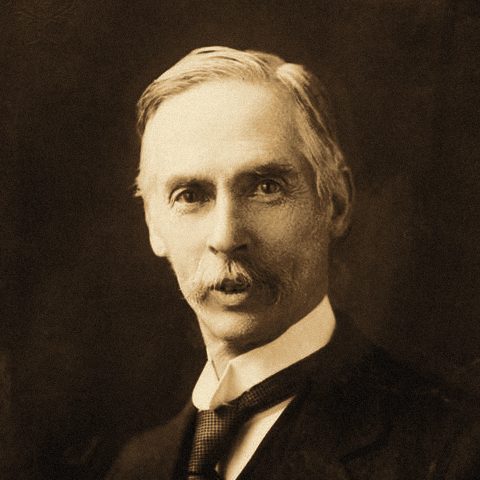
J. A. Hobson
1858 Derby – 1940 Hampstead · English economist, social scientist and critic of imperialism
John Atkinson Hobson was an English economist and social scientist. Hobson is best known for his writing on imperialism, which influenced Vladimir Lenin, and his theory of underconsumption.
If you like The Evolution of Modern Capitalism
More like this


Start with “Preface”
2 chapters free right now — no account. Your place follows you to iPhone and Android.