

2 chapters freeNo account needed.
Opens “Part 1, Chapter 1: The British Constitution” in the player · no sign-up needed
The English Utilitarians represent one outcome of the speculations current in England during the later part of the eighteenth century.
Stephen begins by surveying English society around 1800, including the constitution, ruling class, church, universities, manufacturers, the poor and the response to the French Revolution.
Inside the book
- Free nowno account · 2 chapters
- —Preface18 min
- 2Part 1, Chapter 1: The British Constitution10 min
- Premium22 chapters · every book, 7 days free
- 3Part 1, Chapter 2: The Ruling Class5 min
- 4Part 1, Chapter 3: Legislation and Administration13 min
- 5Part 1, Chapter 4: The Army and Navy6 min
- 6Part 1, Chapter 5: The Church12 min
- 7Part 1, Chapter 6: The Universities13 min
- 8Part 1, Chapter 7: Theory8 min
- 9Part 2, Chapter 1: The Manufacturers20 min
- 10Part 2, Chapter 2: The Agriculturists27 min
- 11Part 3, Chapter 1: Pauperism18 min
- 12Part 3, Chapter 2: The Police15 min
- 13Part 3, Chapter 3: Education8 min
- 14Part 3, Chapter 4: The Slave-Trade13 min
- 15Part 3, Chapter 5: The French Revolution15 min
- 16Part 3, Chapter 6: Individualism10 min
- 17Part 4, Chapter 1: John Horne Tooke7 min
- 18Part 4, Chapter 2: Dugald Stewart42 min
- 19Part 5, Chapter 1: Early Life10 min
- 20Part 5, Chapter 2: First Writings28 min
- 21Part 5, Chapter 3: The Panopticon21 min
- 22Part 5, Chapter 4: The Utilitarian Propaganda24 min
- 23Part 5, Chapter 5: Codification20 min
- 24Part 6, Chapter 1: First Principles23 min
The opening
Part 1, Chapter 1: The British Constitution
The English Utilitarians represent one outcome of the speculations current in England during the later part of the eighteenth century. For the reasons just assigned I shall begin by briefly recalling some of the social conditions which set the problems for the coming generation and determined the mode of answering them. I must put the main facts in evidence, though they are even painfully familiar. The most obvious starting-point is given by the political situation. The supremacy of parliament had been definitively established by the revolution of 1688, and had been followed by the elaboration of the system of party government. The centre of gravity of the political world lay in the House of Commons. No minister could hold power unless he could command a majority in this house. Jealousy of the royal power, however, was still a ruling passion. The party line between Whig and Tory turned ostensibly upon this issue. The essential Whig doctrine is indicated by Dunning's famous resolution (6 April 1780) that 'the power of the crown had increased, was increasing, and ought to be diminished.' The resolution was in one sense an anachronism.
As in many other cases, politicians seem to be elaborately slaying the slain and guarding against the attacks of extinct monsters. There was scarcely more probability under George III. than there is under Victoria that the king would try to raise taxes without consent of parliament. George III., however, desired to be more than a contrivance for fixing the great seal to official documents. He had good reason for thinking that the weakness of the executive was an evil. The king could gain power not by attacking the authority of parliament but by gaining influence within its walls. He might form a party of 'king's friends' able to hold the balance between the connections formed by the great families and so break up the system of party government. Burke's great speech (11 Feb. 1780) upon introducing his plan 'for the better security of the independence of parliament and the economical reformation of the civil and other establishments' explains the secret and reveals the state of things which for the next half century was to supply one main theme for the eloquence of reformers. The king had at his disposal a vast amount of patronage.
There were relics of ancient institutions: the principality of Wales, the duchies of Lancaster and Cornwall, and the earldom of Chester; each with its revenue and establishment of superfluous officials. The royal household was a complex 'body corporate' founded in the old days of 'purveyance.' There was the mysterious 'Board of Green Cloth' formed by the great officers and supposed to have judicial as well as administrative functions. Cumbrous mediaeval machinery thus remained which had been formed in the time when the distinction between a public trust and private property was not definitely drawn or which had been allowed to remain for the sake of patronage, when its functions had been transferred to officials of more modern type. Reform was foiled, as Burke put it, because the turnspit in the king's kitchen was a member of parliament. Such sinecures and the pensions on the civil list or the Irish establishment provided the funds by which the king could build up a personal influence, which was yet occult, irresponsible, and corrupt. The measure passed by Burke in 1782 made a beginning in the removal of such abuses.
Meanwhile the Whigs were conveniently blind to another side of the question. If the king could buy, it was because there were plenty of people both able and willing to sell. Bubb Dodington, a typical example of the old system, had five or six seats at his disposal: subject only to the necessity of throwing a few pounds to the 'venal wretches' who went through the form of voting, and by dealing in what he calls this 'merchantable ware' he managed by lifelong efforts to wriggle into a peerage. The Dodingtons, that is, sold because they bought. The 'venal wretches' were the lucky franchise-holders in rotten boroughs. The 'Friends of the People' in 1793 made the often-repeated statement that 154 individuals returned 307 members, that is, a majority of the house. In Cornwall, again, 21 boroughs with 453 electors controlled by about 15 individuals returned 42 members, or, with the two county members, only one member less than Scotland; and the Scottish members were elected by close corporations in boroughs and by the great families in counties. No wonder if the House of Commons seemed at times to be little more than an exchange for the traffic between the proprietors of votes and the proprietors of offices and pensions.
The demand for the reforms advocated by Burke and Dunning was due to the catastrophe of the American War. The scandal caused by the famous coalition of 1783 showed that a diminution of the royal influence might only make room for selfish bargains among the proprietors of parliamentary influence. The demand for reform was taken up by Pitt. His plan was significant. He proposed to disfranchise a few rotten boroughs; but to soften this measure he afterwards suggested that a million should be set aside to buy such boroughs as should voluntarily apply for disfranchisement. The seats obtained were to be mainly added to county representation; but the franchise was to be extended so as to add about 99,000 voters in boroughs, and additional seats were to be given to London and Westminster and to Manchester, Leeds, Birmingham, and Sheffield. The Yorkshire reformers, who led the movement, were satisfied with this modest scheme. The borough proprietors were obviously too strong to be directly attacked, though they might be induced to sell some of their power.
Here was a mass of anomalies, sufficient to supply topics of denunciation for two generations of reformers, and, in time, to excite fears of violent revolution. Without undertaking the easy task of denouncing exploded systems, we may ask what state of mind they implied. Our ancestors were perfectly convinced that their political system was of almost unrivalled excellence: they held that they were freemen entitled to look down upon foreigners as the slaves of despots. Nor can we say that their satisfaction was without solid grounds. The boasting about English freedom implied some misunderstanding. But it was at least the boast of a vigorous race. Not only were there individuals capable of patriotism and public spirit, but the body politic was capable of continuous energy. During the eighteenth century the British empire spread round the world. Under Chatham it had been finally decided that the English race should be the dominant element in the new world; if the political connection had been severed by the bungling of his successors, the unbroken spirit of the nation had still been shown in the struggle against France, Spain, and the revolted colonies; and whatever may be thought of the motives which produced the great revolutionary wars, no one can deny the qualities of indomitable self-reliance and high courage to the men who led the country through the twenty years of struggle against France, and for a time against France with the continent at its feet. If moralists or political theorists find much to condemn in the ends to which British policy was directed, they must admit that the qualities displayed were not such as can belong to a simply corrupt and mean-spirited government.
One obvious remark is that, on the whole, the system was a very good one—as systems go. It allowed free play to the effective political forces. Down to the revolutionary period, the nation as a whole was contented with its institutions. The political machinery provided a sufficient channel for the really efficient force of public opinion. There was as yet no large class which at once had political aspirations and was unable to gain a hearing. England was still in the main an agricultural country: and the agricultural labourer was fairly prosperous till the end of the century, while his ignorance and isolation made him indifferent to politics. There might be a bad squire or parson, as there might be a bad season; but squire and parson were as much parts of the natural order of things as the weather. The farmer or yeoman was not much less stolid; and his politics meant at most a choice between allegiance to one or other of the county families. If in the towns which were rapidly developing there was growing up a discontented population, its discontent was not yet directed into political channels.
An extended franchise meant a larger expenditure on beer, not the readier acceptance of popular aspirations. To possess a vote was to have a claim to an occasional bonus rather than a right to influence legislation. Practically, therefore, parliament might be taken to represent what might be called 'public opinion,' for anything that deserved to be called public opinion was limited to the opinions of the gentry and the more intelligent part of the middle classes. There was no want of complaints of corruption, proposals to exclude placemen from parliament and the like; and in the days of Wilkes, Chatham, and Junius, when the first symptoms of democratic activity began to affect the political movement, the discontent made itself audible and alarming. But a main characteristic of the English reformers was the constant appeal to precedent, even in their most excited moods. They do not mention the rights of man; they invoke the 'revolution principles' of 1688; they insist upon the 'Bill of Rights' or Magna Charta. When keenly roused they recall the fate of Charles I.; and their favourite toast is the cause for which Hampden died on the field and Sidney on the scaffold.
They believe in the jury as the 'palladium of our liberties'; and are convinced that the British Constitution represents an unsurpassable though unfortunately an ideal order of things, which must have existed at some indefinite period. Chatham in one of his most famous speeches, appeals, for example, to the 'iron barons' who resisted King John, and contrasts them with the silken courtiers which now compete for place and pensions. The political reformers of the time, like religious reformers in most times, conceive of themselves only as demanding the restoration of the system to its original purity, not as demanding its abrogation. In other words, they propose to remedy abuses but do not as yet even contemplate a really revolutionary change. Wilkes was not a 'Wilkite,' nor was any of his party, if Wilkite meant anything like Jacobin.
About the author
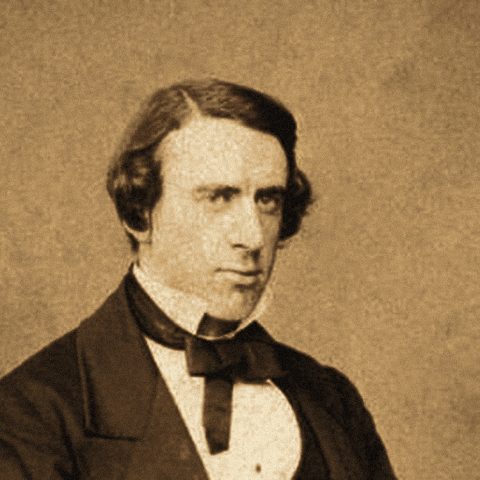
Leslie Stephen
1832 London – 1904 Kensington · English writer and mountaineer
Sir Leslie Stephen was an English author, critic, historian, biographer, mountaineer, and an Ethical movement activist. He was also the father of Virginia Woolf and Vanessa Bell and the founder of England's Dictionary of National Biography.
If you like The English Utilitarians, Volume 1
More like this


Start with “Part 1, Chapter 1: The British Constitution”
2 chapters free right now — no account. Your place follows you to iPhone and Android.