

Chapter 1 freeNo account needed.
Opens “Marseilles—The Arrival” in the player · no sign-up needed
On the 24th of February, 1815, the look-out at Notre-Dame de la Garde signalled the three-master, the Pharaon from Smyrna, Trieste, and Naples.
The Count of Monte Cristo is an adventure novel by the French writer Alexandre Dumas.
Inside the book
- Free nowno account · 1 chapter
- 1Marseilles—The Arrival18 min
- Premium116 chapters · every book, 7 days free
- 2Father and Son15 min
- 3The Catalans22 min
- 4Conspiracy14 min
- 5The Marriage Feast31 min
- 6The Deputy Procureur du Roi24 min
- 7The Examination20 min
- 8The Château d’If18 min
- 9The Evening of the Betrothal10 min
- 10The King’s Closet at the Tuileries17 min
- 11The Corsican Ogre17 min
- 12Father and Son15 min
- 13The Hundred Days14 min
- 14The Two Prisoners18 min
- 15Number 34 and Number 2730 min
- 16A Learned Italian23 min
- 17The Abbé’s Chamber44 min
- 18The Treasure26 min
- 19The Third Attack22 min
- 20The Cemetery of the Château d’If11 min
- 21The Island of Tiboulen20 min
- 22The Smugglers15 min
- 23The Island of Monte Cristo17 min
- 24The Secret Cave17 min
- 25The Unknown17 min
- 26The Pont du Gard Inn32 min
- 27The Story29 min
- 28The Prison Register14 min
- 29The House of Morrel & Son25 min
- 30The Fifth of September33 min
- 31Italy: Sinbad the Sailor48 min
- 32The Waking12 min
- 35La Mazzolata30 min
- 36The Carnival at Rome36 min
- 37The Catacombs of Saint Sebastian34 min
- 38The Rendezvous17 min
- 39The Guests16 min
- 40The Breakfast48 min
- 41The Presentation28 min
- 42Monsieur Bertuccio9 min
- 43The House at Auteuil14 min
- 44The Vendetta47 min
- 45The Rain of Blood29 min
- 46Unlimited Credit29 min
- 47The Dappled Grays29 min
- 48Ideology25 min
- 49Haydée10 min
- 50The Morrel Family19 min
- 51Pyramus and Thisbe26 min
- 52Toxicology36 min
- 53Robert le Diable36 min
- 54A Flurry in Stocks24 min
- 55Major Cavalcanti22 min
- 56Andrea Cavalcanti26 min
- 57In the Lucern Patch25 min
- 58M. Noirtier de Villefort19 min
- 59The Will18 min
- 60The Telegraph21 min
- 61How a Gardener May Get Rid of the Dormice that Eat His Peaches19 min
- 62Ghosts18 min
- 63The Dinner20 min
- 64The Beggar18 min
- 65A Conjugal Scene20 min
- 66Matrimonial Projects20 min
- 67The Office of the King’s Attorney24 min
- 68A Summer Ball14 min
- 69The Inquiry18 min
- 70The Ball18 min
- 71Bread and Salt8 min
- 72Madame de Saint-Méran25 min
- 73The Promise55 min
- 74The Villefort Family Vault19 min
- 75A Signed Statement22 min
- 76Progress of Cavalcanti the Younger21 min
- 77Haydée46 min
- 78We hear From Yanina40 min
- 79The Lemonade24 min
- 80The Accusation12 min
- 81The Room of the Retired Baker35 min
- 82The Burglary27 min
- 83The Hand of God12 min
- 84Beauchamp13 min
- 85The Journey20 min
- 86The Trial26 min
- 87The Challenge13 min
- 88The Insult19 min
- 89The Night16 min
- 90The Meeting24 min
- 91Mother and Son12 min
- 92The Suicide18 min
- 93Valentine15 min
- 94Maximilian’s Avowal24 min
- 95Father and Daughter19 min
- 96The Contract22 min
- 97The Departure for Belgium13 min
- 98The Bell and Bottle Tavern25 min
- 99The Law20 min
- 100The Apparition14 min
- 101Locusta11 min
- 102Valentine12 min
- 103Maximilian18 min
- 104Danglars’ Signature22 min
- 105The Cemetery of Père-Lachaise26 min
- 106Dividing the Proceeds31 min
- 107The Lions’ Den16 min
- 108The Judge20 min
- 109The Assizes12 min
- 110The Indictment15 min
- 111Expiation18 min
- 112The Departure29 min
- 113The Past24 min
- 114Peppino22 min
- 115Luigi Vampa’s Bill of Fare14 min
- 116The Pardon10 min
- 117The Fifth of October29 min
The opening
Marseilles—The Arrival
On the 24th of February, 1815, the look-out at Notre-Dame de la Garde signalled the three-master, the Pharaon from Smyrna, Trieste, and Naples.
As usual, a pilot put off immediately, and rounding the Château d'If, got on board the vessel between Cape Morgiou and Rion island.
Immediately, and according to custom, the ramparts of Fort Saint-Jean were covered with spectators; it is always an event at Marseilles for a ship to come into port, especially when this ship, like the Pharaon, has been built, rigged, and laden at the old Phocée docks, and belongs to an owner of the city.
The ship drew on and had safely passed the strait, which some volcanic shock has made between the Calasareigne and Jaros islands; had doubled Pomègue, and approached the harbor under topsails, jib, and spanker, but so slowly and sedately that the idlers, with that instinct which is the forerunner of evil, asked one another what misfortune could have happened on board. However, those experienced in navigation saw plainly that if any accident had occurred, it was not to the vessel herself, for she bore down with all the evidence of being skilfully handled, the anchor a-cockbill, the jib-boom guys already eased off, and standing by the side of the pilot, who was steering the Pharaon towards the narrow entrance of the inner port, was a young man, who, with activity and vigilant eye, watched every motion of the ship, and repeated each direction of the pilot.
The vague disquietude which prevailed among the spectators had so much affected one of the crowd that he did not await the arrival of the vessel in harbor, but jumping into a small skiff, desired to be pulled alongside the Pharaon, which he reached as she rounded into La Réserve basin.
When the young man on board saw this person approach, he left his station by the pilot, and, hat in hand, leaned over the ship's bulwarks.
He was a fine, tall, slim young fellow of eighteen or twenty, with black eyes, and hair as dark as a raven's wing; and his whole appearance bespoke that calmness and resolution peculiar to men accustomed from their cradle to contend with danger.
"Ah, is it you, Dantès?" cried the man in the skiff. "What's the matter? and why have you such an air of sadness aboard?"
"A great misfortune, M. Morrel," replied the young man, "a great misfortune, for me especially! Off Civita Vecchia we lost our brave Captain Leclere."
"And the cargo?" inquired the owner, eagerly.
"Is all safe, M. Morrel; and I think you will be satisfied on that head. But poor Captain Leclere——"
"What happened to him?" asked the owner, with an air of considerable resignation. "What happened to the worthy captain?"
"He died."
"Fell into the sea?"
"No, sir, he died of brain-fever in dreadful agony." Then turning to the crew, he said, "Bear a hand there, to take in sail!"
All hands obeyed, and at once the eight or ten seamen who composed the crew, sprang to their respective stations at the spanker brails and outhaul, topsail sheets and halyards, the jib downhaul, and the topsail clewlines and buntlines. The young sailor gave a look to see that his orders were promptly and accurately obeyed, and then turned again to the owner.
"And how did this misfortune occur?" inquired the latter, resuming the interrupted conversation.
0023m
"Alas, sir, in the most unexpected manner. After a long talk with the harbor-master, Captain Leclere left Naples greatly disturbed in mind. In twenty-four hours he was attacked by a fever, and died three days afterwards. We performed the usual burial service, and he is at his rest, sewn up in his hammock with a thirty-six-pound shot at his head and his heels, off El Giglio island. We bring to his widow his sword and cross of honor. It was worth while, truly," added the young man with a melancholy smile, "to make war against the English for ten years, and to die in his bed at last, like everybody else."
"Why, you see, Edmond," replied the owner, who appeared more comforted at every moment, "we are all mortal, and the old must make way for the young. If not, why, there would be no promotion; and since you assure me that the cargo——"
"Is all safe and sound, M. Morrel, take my word for it; and I advise you not to take 25,000 francs for the profits of the voyage."
Then, as they were just passing the Round Tower, the young man shouted: "Stand by there to lower the topsails and jib; brail up the spanker!"
The order was executed as promptly as it would have been on board a man-of-war.
"Let go—and clue up!" At this last command all the sails were lowered, and the vessel moved almost imperceptibly onwards.
"Now, if you will come on board, M. Morrel," said Dantès, observing the owner's impatience, "here is your supercargo, M. Danglars, coming out of his cabin, who will furnish you with every particular. As for me, I must look after the anchoring, and dress the ship in mourning."
The owner did not wait for a second invitation. He seized a rope which Dantès flung to him, and with an activity that would have done credit to a sailor, climbed up the side of the ship, while the young man, going to his task, left the conversation to Danglars, who now came towards the owner. He was a man of twenty-five or twenty-six years of age, of unprepossessing countenance, obsequious to his superiors, insolent to his subordinates; and this, in addition to his position as responsible agent on board, which is always obnoxious to the sailors, made him as much disliked by the crew as Edmond Dantès was beloved by them.
"Well, M. Morrel," said Danglars, "you have heard of the misfortune that has befallen us?"
"Yes—yes: poor Captain Leclere! He was a brave and an honest man."
"And a first-rate seaman, one who had seen long and honorable service, as became a man charged with the interests of a house so important as that of Morrel & Son," replied Danglars.
"But," replied the owner, glancing after Dantès, who was watching the anchoring of his vessel, "it seems to me that a sailor needs not be so old as you say, Danglars, to understand his business, for our friend Edmond seems to understand it thoroughly, and not to require instruction from anyone."
"Yes," said Danglars, darting at Edmond a look gleaming with hate. "Yes, he is young, and youth is invariably self-confident. Scarcely was the captain's breath out of his body when he assumed the command without consulting anyone, and he caused us to lose a day and a half at the Island of Elba, instead of making for Marseilles direct."
0025m
"As to taking command of the vessel," replied Morrel, "that was his duty as captain's mate; as to losing a day and a half off the Island of Elba, he was wrong, unless the vessel needed repairs."
"The vessel was in as good condition as I am, and as, I hope you are, M. Morrel, and this day and a half was lost from pure whim, for the pleasure of going ashore, and nothing else."
"Dantès," said the shipowner, turning towards the young man, "come this way!"
"In a moment, sir," answered Dantès, "and I'm with you." Then calling to the crew, he said, "Let go!"
The anchor was instantly dropped, and the chain ran rattling through the port-hole. Dantès continued at his post in spite of the presence of the pilot, until this manœuvre was completed, and then he added, "Half-mast the colors, and square the yards!"
"You see," said Danglars, "he fancies himself captain already, upon my word."
"And so, in fact, he is," said the owner.
"Except your signature and your partner's, M. Morrel."
"And why should he not have this?" asked the owner; "he is young, it is true, but he seems to me a thorough seaman, and of full experience."
A cloud passed over Danglars' brow.
"Your pardon, M. Morrel," said Dantès, approaching, "the vessel now rides at anchor, and I am at your service. You hailed me, I think?"
Danglars retreated a step or two. "I wished to inquire why you stopped at the Island of Elba?"
"I do not know, sir; it was to fulfil the last instructions of Captain Leclere, who, when dying, gave me a packet for Marshal Bertrand."
"Then did you see him, Edmond?"
"Who?"
"The marshal."
"Yes."
Morrel looked around him, and then, drawing Dantès on one side, he said suddenly—
"And how is the emperor?"
"Very well, as far as I could judge from the sight of him."
"You saw the emperor, then?"
"He entered the marshal's apartment while I was there."
"And you spoke to him?"
"Why, it was he who spoke to me, sir," said Dantès, with a smile.
"And what did he say to you?"
"Asked me questions about the vessel, the time she left Marseilles, the course she had taken, and what was her cargo. I believe, if she had not been laden, and I had been her master, he would have bought her. But I told him I was only mate, and that she belonged to the firm of Morrel & Son. 'Ah, yes,' he said, 'I know them. The Morrels have been shipowners from father to son; and there was a Morrel who served in the same regiment with me when I was in garrison at Valence.'"
"Pardieu! and that is true!" cried the owner, greatly delighted. "And that was Policar Morrel, my uncle, who was afterwards a captain. Dantès, you must tell my uncle that the emperor remembered him, and you will see it will bring tears into the old soldier's eyes. Come, come," continued he, patting Edmond's shoulder kindly, "you did very right, Dantès, to follow Captain Leclere's instructions, and touch at Elba, although if it were known that you had conveyed a packet to the marshal, and had conversed with the emperor, it might bring you into trouble."
0027m
"How could that bring me into trouble, sir?" asked Dantès; "for I did not even know of what I was the bearer; and the emperor merely made such inquiries as he would of the first comer. But, pardon me, here are the health officers and the customs inspectors coming alongside." And the young man went to the gangway. As he departed, Danglars approached, and said,—
"Well, it appears that he has given you satisfactory reasons for his landing at Porto-Ferrajo?"
"Yes, most satisfactory, my dear Danglars."
"Well, so much the better," said the supercargo; "for it is not pleasant to think that a comrade has not done his duty."
"Dantès has done his," replied the owner, "and that is not saying much. It was Captain Leclere who gave orders for this delay."
"Talking of Captain Leclere, has not Dantès given you a letter from him?"
"To me?—no—was there one?"
"I believe that, besides the packet, Captain Leclere confided a letter to his care."
"Of what packet are you speaking, Danglars?"
"Why, that which Dantès left at Porto-Ferrajo."
"How do you know he had a packet to leave at Porto-Ferrajo?"
Danglars turned very red.
"I was passing close to the door of the captain's cabin, which was half open, and I saw him give the packet and letter to Dantès."
"He did not speak to me of it," replied the shipowner; "but if there be any letter he will give it to me."
Danglars reflected for a moment. "Then, M. Morrel, I beg of you," said he, "not to say a word to Dantès on the subject. I may have been mistaken."
At this moment the young man returned; Danglars withdrew.
"Well, my dear Dantès, are you now free?" inquired the owner.
"Yes, sir."
"You have not been long detained."
"No. I gave the custom-house officers a copy of our bill of lading; and as to the other papers, they sent a man off with the pilot, to whom I gave them."
"Then you have nothing more to do here?"
"No—everything is all right now."
"Then you can come and dine with me?"
"I really must ask you to excuse me, M. Morrel. My first visit is due to my father, though I am not the less grateful for the honor you have done me."
0029m
"Right, Dantès, quite right. I always knew you were a good son."
"And," inquired Dantès, with some hesitation, "do you know how my father is?"
"Well, I believe, my dear Edmond, though I have not seen him lately."
"Yes, he likes to keep himself shut up in his little room."
"That proves, at least, that he has wanted for nothing during your absence."
Dantès smiled. "My father is proud, sir, and if he had not a meal left, I doubt if he would have asked anything from anyone, except from Heaven."
"Well, then, after this first visit has been made we shall count on you."
"I must again excuse myself, M. Morrel, for after this first visit has been paid I have another which I am most anxious to pay."
"True, Dantès, I forgot that there was at the Catalans someone who expects you no less impatiently than your father—the lovely Mercédès."
Dantès blushed.
"Ah, ha," said the shipowner, "I am not in the least surprised, for she has been to me three times, inquiring if there were any news of the Pharaon. Peste! Edmond, you have a very handsome mistress!"
"She is not my mistress," replied the young sailor, gravely; "she is my betrothed."
"Sometimes one and the same thing," said Morrel, with a smile.
"Not with us, sir," replied Dantès.
"Well, well, my dear Edmond," continued the owner, "don't let me detain you. You have managed my affairs so well that I ought to allow you all the time you require for your own. Do you want any money?"
"No, sir; I have all my pay to take—nearly three months' wages."
"You are a careful fellow, Edmond."
"Say I have a poor father, sir."
"Yes, yes, I know how good a son you are, so now hasten away to see your father. I have a son too, and I should be very wroth with those who detained him from me after a three months' voyage."
"Then I have your leave, sir?"
"Yes, if you have nothing more to say to me."
"Nothing."
"Captain Leclere did not, before he died, give you a letter for me?"
"He was unable to write, sir. But that reminds me that I must ask your leave of absence for some days."
"To get married?"
"Yes, first, and then to go to Paris."
"Very good; have what time you require, Dantès. It will take quite six weeks to unload the cargo, and we cannot get you ready for sea until three months after that; only be back again in three months, for the Pharaon," added the owner, patting the young sailor on the back, "cannot sail without her captain."
"Without her captain!" cried Dantès, his eyes sparkling with animation; "pray mind what you say, for you are touching on the most secret wishes of my heart. Is it really your intention to make me captain of the Pharaon?"
"If I were sole owner we'd shake hands on it now, my dear Dantès, and call it settled; but I have a partner, and you know the Italian proverb—Chi ha compagno ha padrone—'He who has a partner has a master.' But the thing is at least half done, as you have one out of two votes. Rely on me to procure you the other; I will do my best."
"Ah, M. Morrel," exclaimed the young seaman, with tears in his eyes, and grasping the owner's hand, "M. Morrel, I thank you in the name of my father and of Mercédès."
"That's all right, Edmond. There's a providence that watches over the deserving. Go to your father; go and see Mercédès, and afterwards come to me."
"Shall I row you ashore?"
"No, thank you; I shall remain and look over the accounts with Danglars. Have you been satisfied with him this voyage?"
"That is according to the sense you attach to the question, sir. Do you mean is he a good comrade? No, for I think he never liked me since the day when I was silly enough, after a little quarrel we had, to propose to him to stop for ten minutes at the island of Monte Cristo to settle the dispute—a proposition which I was wrong to suggest, and he quite right to refuse. If you mean as responsible agent when you ask me the question, I believe there is nothing to say against him, and that you will be content with the way in which he has performed his duty."
"But tell me, Dantès, if you had command of the Pharaon should you be glad to see Danglars remain?"
"Captain or mate, M. Morrel, I shall always have the greatest respect for those who possess the owners' confidence."
"That's right, that's right, Dantès! I see you are a thoroughly good fellow, and will detain you no longer. Go, for I see how impatient you are."
"Then I have leave?"
"Go, I tell you."
"May I have the use of your skiff?"
"Certainly."
"Then, for the present, M. Morrel, farewell, and a thousand thanks!"
"I hope soon to see you again, my dear Edmond. Good luck to you."
The young sailor jumped into the skiff, and sat down in the stern sheets, with the order that he be put ashore at La Canebière. The two oarsmen bent to their work, and the little boat glided away as rapidly as possible in the midst of the thousand vessels which choke up the narrow way which leads between the two rows of ships from the mouth of the harbor to the Quai d'Orléans.
The shipowner, smiling, followed him with his eyes until he saw him spring out on the quay and disappear in the midst of the throng, which from five o'clock in the morning until nine o'clock at night, swarms in the famous street of La Canebière,—a street of which the modern Phocéens are so proud that they say with all the gravity in the world, and with that accent which gives so much character to what is said, "If Paris had La Canebière, Paris would be a second Marseilles." On turning round the owner saw Danglars behind him, apparently awaiting orders, but in reality also watching the young sailor,—but there was a great difference in the expression of the two men who thus followed the movements of Edmond Dantès.
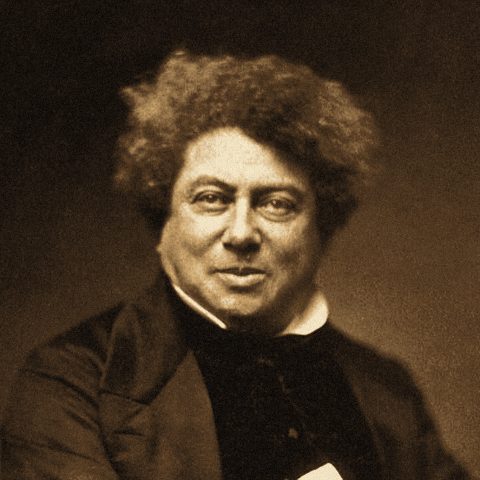
About the author
Alexandre Dumas
1802 Villers-Cotterêts – 1870 Puys · French writer and dramatist
Alexandre Dumas, also known as Alexandre Dumas père, was a French novelist and playwright.
- 1802Born, Villers-Cotterêts
- 1844The Count of Monte Cristo
- 1844The Three Musketeers
- 1845Twenty Years After
- 1847The Man in the Iron Mask
- 1848Camille
- 1870Died, Puys
More by Alexandre Dumas
Keep going with Dumas


If you like The Count of Monte Cristo
More like this


Start with “Marseilles—The Arrival”
First chapter free right now — no account. Your place follows you to iPhone and Android.