

2 chapters freeNo account needed.
Opens “The Foster-Mother’s Tale, A Dramatic Fragment” in the player · no sign-up needed
MARIA. 'Tis strange! he spake of you familiarly As mine and Albert's common Foster-mother.
Written in plain language about rural people and ordinary feeling, it includes Wordsworth's "We Are Seven," "The Thorn," "The Idiot Boy," "Goody Blake and Harry Gill" and "The Complaint of a Forsaken Indian Woman," along with Coleridge's "The Foster-Mother's…
Inside the book
- Free nowno account · 2 chapters
- —Introduction12 min
- 1The Foster-Mother’s Tale, A Dramatic Fragment7 min
- Premium12 chapters · every book, 7 days free
- 2A Conversational Poem, Written in April, 17985 min
- 3The Female Vagrant12 min
- 4Goody Blake, and Harry Gill, A True Story10 min
- 5Anecdote for Fathers Shewing How the Art of Lying May Be Taught2 min
- 6We Are Seven3 min
- 7The Thorn9 min
- 8The Last of the Flock5 min
- 9The Mad Mother4 min
- 10The Idiot Boy17 min
- 11Lines Written Near Richmond, upon the Thames, at Evening5 min
- 12The Complaint of A Forsaken Indian Woman3 min
- 13The Convict9 min
The opening
The Foster-Mother’s Tale, A Dramatic Fragment
FOSTER-MOTHER. I never saw the man whom you describe.
MARIA. 'Tis strange! he spake of you familiarly As mine and Albert's common Foster-mother.
FOSTER-MOTHER. Now blessings on the man, whoe'er he be, That joined your names with mine! O my sweet lady, As often as I think of those dear times When you two little ones would stand at eve On each side of my chair, and make me learn All you had learnt in the day; and how to talk In gentle phrase, then bid me sing to you-- 'Tis more like heaven to come than what has been.
MARIA. O my dear Mother! this strange man has left me Troubled with wilder fancies, than the moon Breeds in the love-sick maid who gazes at it, Till lost in inward vision, with wet eye She gazes idly!—But that entrance, Mother!
FOSTER-MOTHER. Can no one hear? It is a perilous tale!
MARIA. No one.
FOSTER-MOTHER My husband's father told it me, Poor old Leoni!—Angels rest his soul! He was a woodman, and could fell and saw With lusty arm. You know that huge round beam Which props the hanging wall of the old chapel? Beneath that tree, while yet it was a tree He found a baby wrapt in mosses, lined With thistle-beards, and such small locks of wool As hang on brambles. Well, he brought him home, And reared him at the then Lord Velez' cost. And so the babe grew up a pretty boy, A pretty boy, but most unteachable-- And never learnt a prayer, nor told a bead, But knew the names of birds, and mocked their notes, And whistled, as he were a bird himself: And all the autumn 'twas his only play To get the seeds of wild flowers, and to plant them With earth and water, on the stumps of trees. A Friar, who gathered simples in the wood, A grey-haired man—he loved this little boy, The boy loved him—and, when the Friar taught him, He soon could write with the pen: and from that time, Lived chiefly at the Convent or the Castle. So he became a very learned youth.
But Oh! poor wretch!—he read, and read, and read, 'Till his brain turned—and ere his twentieth year, He had unlawful thoughts of many things: And though he prayed, he never loved to pray With holy men, nor in a holy place-- But yet his speech, it was so soft and sweet, The late Lord Velez ne'er was wearied with him. And once, as by the north side of the Chapel They stood together, chained in deep discourse, The earth heaved under them with such a groan, That the wall tottered, and had well-nigh fallen Right on their heads. My Lord was sorely frightened; A fever seized him, and he made confession Of all the heretical and lawless talk Which brought this judgment: so the youth was seized And cast into that hole. My husband's father Sobbed like a child—it almost broke his heart: And once as he was working in the cellar, He heard a voice distinctly; 'twas the youth's, Who sung a doleful song about green fields, How sweet it were on lake or wild savannah, To hunt for food, and be a naked man, And wander up and down at liberty. He always doted on the youth, and now His love grew desperate; and defying death, He made that cunning entrance I described: And the young man escaped.
MARIA. 'Tis a sweet tale: Such as would lull a listening child to sleep, His rosy face besoiled with unwiped tears.-- And what became of him?
FOSTER-MOTHER. He went on ship-board With those bold voyagers, who made discovery Of golden lands. Leoni's younger brother Went likewise, and when he returned to Spain, He told Leoni, that the poor mad youth, Soon after they arrived in that new world, In spite of his dissuasion, seized a boat, And all alone, set sail by silent moonlight Up a great river, great as any sea, And ne'er was heard of more: but 'tis supposed, He lived and died among the savage men.
LINES LEFT UPON A SEAT IN A YEW-TREE WHICH STANDS NEAR THE LAKE OF ESTHWAITE, ON A DESOLATE PART OF THE SHORE, YET COMMANDING A BEAUTIFUL PROSPECT.
--Nay, Traveller! rest. This lonely yew-tree stands Far from all human dwelling: what if here No sparkling rivulet spread the verdant herb; What if these barren boughs the bee not loves; Yet, if the wind breathe soft, the curling waves, That break against the shore, shall lull thy mind By one soft impulse saved from vacancy.
--Who he was That piled these stones, and with the mossy sod First covered o'er, and taught this aged tree, Now wild, to bend its arms in circling shade, I well remember.—He was one who own'd No common soul. In youth, by genius nurs'd, And big with lofty views, he to the world Went forth, pure in his heart, against the taint Of dissolute tongues, 'gainst jealousy, and hate, And scorn, against all enemies prepared, All but neglect: and so, his spirit damped At once, with rash disdain he turned away, And with the food of pride sustained his soul In solitude.—Stranger! these gloomy boughs Had charms for him; and here he loved to sit, His only visitants a straggling sheep, The stone-chat, or the glancing sand-piper; And on these barren rocks, with juniper, And heath, and thistle, thinly sprinkled o'er, Fixing his downward eye, he many an hour A morbid pleasure nourished, tracing here An emblem of his own unfruitful life: And lifting up his head, he then would gaze On the more distant scene; how lovely 'tis Thou seest, and he would gaze till it became Far lovelier, and his heart could not sustain The beauty still more beauteous. Nor, that time, Would he forget those beings, to whose minds, Warm from the labours of benevolence, The world, and man himself, appeared a scene Of kindred loveliness: then he would sigh With mournful joy, to think that others felt What he must never feel: and so, lost man! On visionary views would fancy feed, Till his eye streamed with tears. In this deep vale He died, this seat his only monument.
If thou be one whose heart the holy forms Of young imagination have kept pure, Stranger! henceforth be warned; and know, that pride, Howe'er disguised in its own majesty, Is littleness; that he, who feels contempt For any living thing, hath faculties Which he has never used; that thought with him Is in its infancy. The man, whose eye Is ever on himself, doth look on one, The least of nature's works, one who might move The wise man to that scorn which wisdom holds Unlawful, ever. O, be wiser thou! Instructed that true knowledge leads to love, True dignity abides with him alone Who, in the silent hour of inward thought, Can still suspect, and still revere himself, In lowliness of heart.
THE NIGHTINGALE;
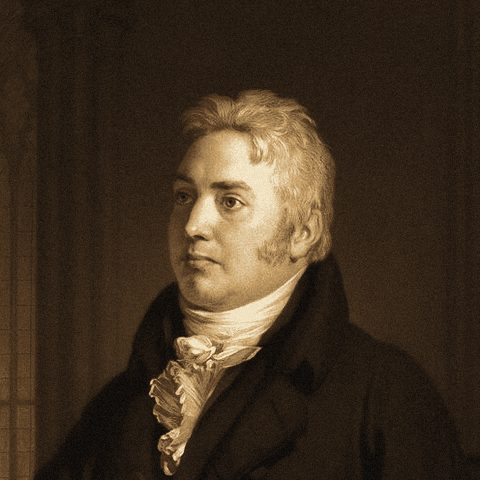
About the author
William Wordsworth
1772 Ottery St Mary – 1834 London · English poet, literary critic and philosopher
Samuel Taylor Coleridge was an English poet, literary critic, philosopher, and theologian who was a founder of the Romantic Movement in England and a member of the Lake Poets with his friend William Wordsworth. He also shared volumes and collaborated with Charles Lamb, Robert Southey, and Charles Lloyd.
If you like Lyrical Ballads, With a Few Other Poems (1798)
More like this


Start with “The Foster-Mother’s Tale, A Dramatic Fragment”
2 chapters free right now — no account. Your place follows you to iPhone and Android.